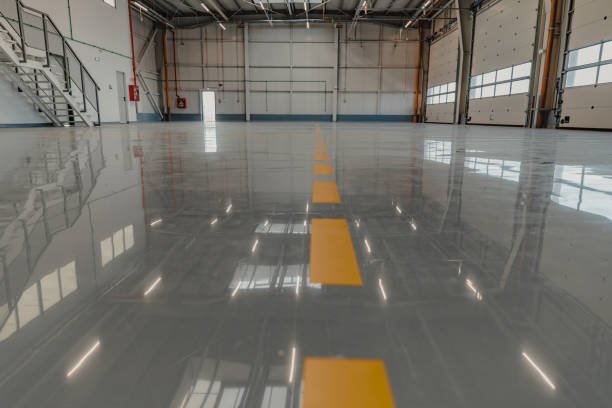
Walk into any garage sale or neighbourhood chat group in the Fraser Valley these days and someone’s bound to be raving about their new floor. Not new carpet, not new tile a hard, glossy, almost mirror-like surface that used to be stained concrete or cracked linoleum. It’s the kind of floor that makes people stop mid-conversation and ask, “wait, what did you put down?
That surface is usually Epoxy Flooring in Langley, BC and the buzz around it isn’t hype. Homeowners are tired of concrete that stains the moment a car leaks a drop of oil, and business owners are done replacing worn-out tile every few years. What used to be a niche industrial coating reserved for warehouses and auto shops has quietly become one of the most requested upgrades for garages, basements, retail spaces, and even kitchens across the region.
Why Concrete Alone Just Doesn’t Cut It Anymore
Bare concrete has a reputation problem, and it’s earned. It’s porous, which means it soaks up oil, road salt, and moisture like a sponge. Over a Langley winter, that moisture creeps in through microscopic cracks, freezes, expands, and slowly turns a smooth slab into a pitted mess. Add in the dust that bare concrete kicks up constantly, and it’s easy to see why so many people finally give up and look for an alternative.
A properly applied epoxy system solves most of that in one shot. It seals the surface completely, resists the chemicals people actually spill in real life antifreeze, gasoline, bleach, fertilizer — and it doesn’t generate dust. For anyone who’s spent a weekend sweeping a garage floor only to watch a fine grey film reappear within days, that alone is worth the investment.
Residential Projects: Garages, Basements, and Workshops
Most residential requests start in the garage. It makes sense — garages take the worst abuse in the house, from dripping vehicles to dropped tools to salt tracked in every winter. A well-installed garage floor coating turns that space from an afterthought into something people are almost proud to show off.
Basements are the second most common ask, especially in older Langley homes where the original concrete has settled or cracked slightly over the decades. Epoxy can bridge minor imperfections and give a basement a finished, livable feel without the cost of a full renovation.
Workshops and hobby spaces round out the list. Anyone running power tools, working with resin, or doing small engine repairs at home appreciates a floor that can be wiped clean instead of scrubbed for an hour.
Commercial and Industrial Applications Across the Region
It’s not just homeowners. Retail stores, auto repair shops, breweries, warehouses, and even veterinary clinics throughout Langley and neighbouring communities are switching over. Commercial epoxy flooring solutions hold up to forklift traffic, constant foot traffic, and the kind of daily wear that would destroy standard flooring within a couple of years.
This trend isn’t limited to Langley either. Contractors are seeing the same demand pop up in Vancouver, where warehouse space is at a premium and business owners can’t afford downtime for floor repairs. A single epoxy application, done right, can outlast a decade of patch jobs and repaints, which makes it an easier decision for facility managers watching a budget.
What Actually Happens During Installation
People are often surprised by how involved a proper installation really is. It’s not paint-and-done. The process typically starts with grinding the concrete surface to open up the pores and remove any old sealant, oil stains, or loose material. Skipping this step is the number one reason cheap online epoxy kits fail within a year the coating simply doesn’t bond to the slab.
After grinding comes crack repair and moisture testing, since trapped moisture underneath a coating can cause bubbling or delamination down the road. Once the surface is ready, the base coat goes down, followed by any decorative flakes or metallic pigments if the homeowner wants that custom look. A topcoat often polyaspartic or polyurethane — seals everything and adds UV resistance so the colour doesn’t yellow over time.
The whole process usually takes two to four days depending on square footage and cure times, which is faster than most people expect for something this durable.
What Drives the Cost Up or Down
Pricing varies more than people assume, and it’s rarely a flat per-square-foot number. A few things move the needle:
- Surface condition – heavily cracked or oil-soaked concrete needs more prep work
- Coating type – standard epoxy costs less than polyaspartic or metallic finishes
- Square footage – larger jobs typically bring the per-foot price down slightly
- Custom finishes – decorative flake systems or logo inlays add labour time
- Moisture barriers – basements near the water table sometimes need an extra vapour barrier layer
Getting a couple of quotes locally is usually the smartest move, since travel time and crew availability shift pricing more than most people realize.
Choosing the Right Contractor
This is where a lot of projects go sideways. Epoxy is unforgiving of shortcuts a rushed grind job or a coating applied in the wrong humidity will bubble, peel, or yellow within months. Anyone researching epoxy floor coating contractors should ask specifically about surface prep methods, cure times between coats, and whether they carry commercial-grade or big-box store materials, because there’s a real quality gap between the two.
It’s also worth asking to see photos of past work that’s a year or two old rather than freshly finished, since that’s the real test of how a coating holds up to daily life.
Keeping an Epoxy Floor Looking New
Maintenance is refreshingly simple compared to tile or hardwood. A dust mop or soft broom handles daily debris, and an occasional mop with warm water and a mild cleaner keeps the shine intact. Harsh degreasers and abrasive pads should be avoided since they can dull the topcoat over time. Beyond that, there’s really nothing to it — no waxing, no resealing every year, no grout lines collecting grime.
A Floor That’s Built for the Long Haul
Between the moisture, road salt, and heavy vehicle use common throughout the Fraser Valley, Epoxy Flooring in Langley, BC has become less of a trend and more of a practical answer to a problem almost every homeowner and business owner eventually runs into. It handles the climate, the traffic, and the daily grind in a way that plain concrete and standard flooring never could, all while giving a space a finished look that’s hard to replicate with anything else.
Final Thoughts
Choosing the right floor isn’t just about looks — it’s about picking something that will still perform the way it should years down the road. That’s exactly the approach the team at PACIFIC FLOORS AND COATINGS takes with every project, whether it’s a single-car garage or a full commercial facility. Proper prep, quality materials, and honest advice go a long way, and that’s what separates a floor that lasts a decade from one that needs redoing in two years.
Frequently Asked Questions
How long does an epoxy floor actually last?
With proper installation and reasonable care, most residential epoxy floors last 10 to 20 years before needing a refresh. Commercial spaces with heavier traffic may need a topcoat renewal sooner, usually every 5 to 10 years.
Can epoxy be applied over an existing crack in concrete?
Small to moderate cracks can usually be filled and bridged during the prep stage. Larger structural cracks typically need to be addressed separately before coating, since epoxy isn’t a substitute for structural repair.
Is epoxy flooring slippery when wet?
Standard glossy finishes can be slick when wet, but most contractors offer a slip-resistant additive that can be mixed into the topcoat, especially useful for garages, entryways, or commercial kitchens.
How soon can I walk or drive on a new epoxy floor?
Light foot traffic is usually fine within 24 hours, but full cure time for vehicle weight typically takes 5 to 7 days, depending on the specific coating system used.
Does epoxy flooring work in cold garages during winter?
Yes, once cured, epoxy holds up well to cold temperatures. The main consideration is during installation, since the coating needs a specific temperature range to cure properly, which is why timing the project matters.